Trauma in Autism

Our Mission

This page introduces core concepts and invites readers to explore resources that reframe autism beyond deficits and toward rights, trauma awareness, and system reform.
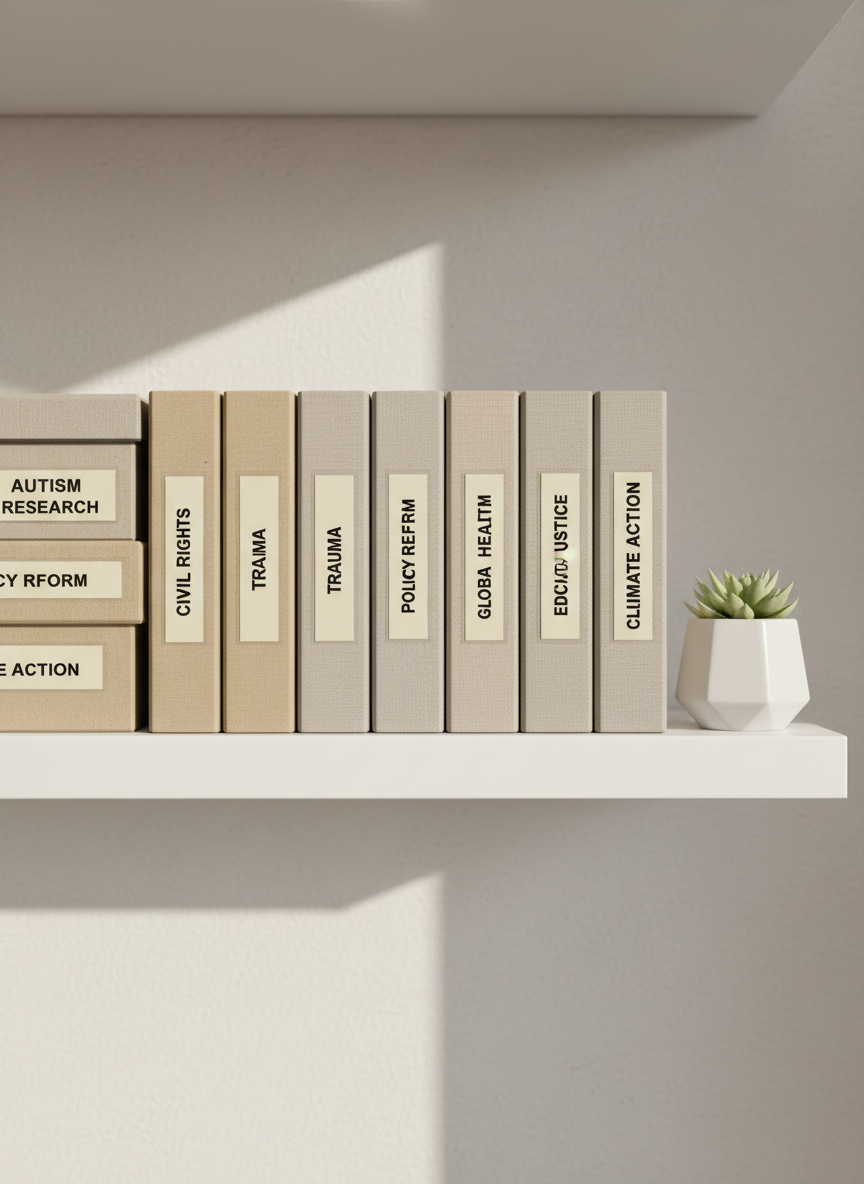

A row of neutral-toned file boxes and labeled binders arranged on a sleek white shelf, each spine clearly marked with concise, legible terms like “Autism Research,” “Civil Rights,” “Trauma,” and “Policy Reform” in a modern sans-serif font. The shelf stands against a matte, light-beige wall, with a single, small, geometric plant pot adding subtle greenery at one end. Soft, overcast daylight from the left casts even illumination and faint, orderly shadows beneath each binder. Photographed from a slightly elevated angle with sharp focus throughout, the composition emphasizes structure, organization, and open-access knowledge in a clean, photographic, minimalist corporate style.
A minimalist workspace featuring an open laptop on a clean, light-wood desk, its screen displaying a simple, monochrome dashboard of organized folders labeled “Resources,” “Research,” and “Action Tools.” Around the laptop sit a slim, gray notebook, a few neatly stacked white documents, and a pair of neutral-toned over-ear headphones resting flat. The background shows a softly blurred, uncluttered office wall in warm gray. Soft, diffused daylight from an unseen window illuminates the scene, creating gentle, professional shadows. Shot at eye level with a shallow depth of field, the composition is centered and balanced, conveying clarity, focus, and accessibility in a photographic realism style with a clean, corporate, mobile-first aesthetic.

Complex trauma inclusion

We challenge deficit-focused stories of autism by elevating under-identified trauma, PTSD, and the harm of systemic practices that overlook autistic and DD/ID communities.


About

Trauma pathways

Explorable sections cover healthcare, education, and family systems, highlighting how trauma manifests and how reform can reduce harm and misidentification.
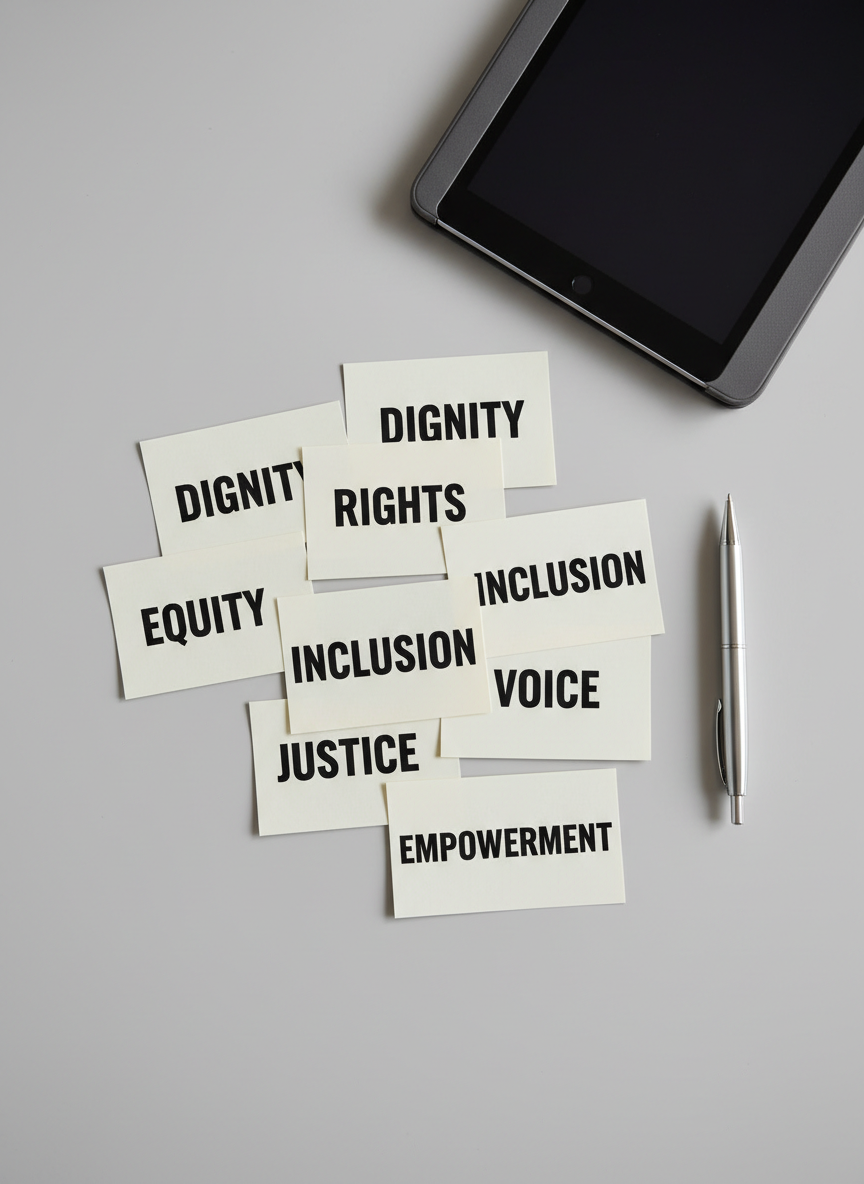
A carefully arranged cluster of neutral-colored index cards spread across a smooth, pale-gray tabletop, each card featuring a bold, simple keyword such as “Dignity,” “Rights,” “Inclusion,” and “Voice” in black, high-contrast type. A slim, metallic pen lies parallel to the table edge, and a closed, charcoal-gray tablet rests just beyond the cards. Soft studio lighting from above and slightly to the right creates subtle gradients and crisp yet gentle shadows, emphasizing the flat, tactile surfaces. Shot from a directly overhead, bird’s-eye perspective with plenty of negative space, the composition feels calm, methodical, and empowering, aligning with a professional, evidence-based advocacy tone in crisp photographic realism.